
Hourly Car Service Chicago: Complete Executive Charter
Hourly car service reserves a chauffeur and vehicle for a defined block, starting with a three-hour minimum. The block covers travel between your stops and waiting while you attend meetings or events. This guide explains how to build a realistic schedule, choose between hourly and separate transfers, and coordinate a Chicago business day without squeezing every appointment against the next departure.
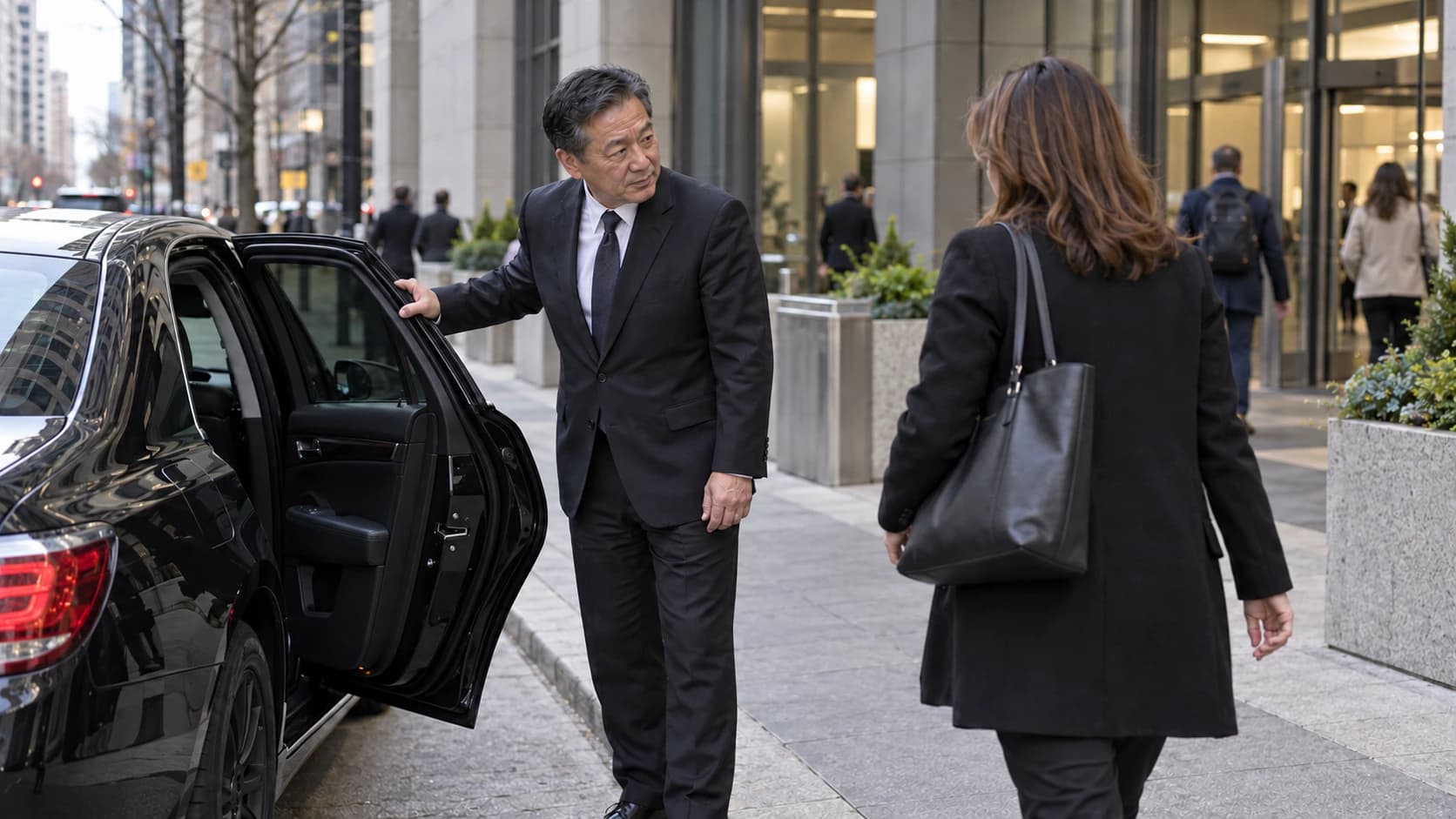
Start with the commitments that have a fixed arrival time
A roadshow usually has several clocks: the first host’s reception time, a meeting that must finish before lunch, and a final airport or event arrival. Identify those fixed commitments before choosing the reserved duration. A flexible coffee stop can move around a delayed meeting; a presentation with an audience waiting has less room to shift.
Build the sequence from the first passenger collection to the final drop-off. For each meeting, allow for the drive, entry to the building, the appointment itself and the walk back to the vehicle. Waiting at stops is part of the booked hourly time, so the meeting occupies the reservation even while the car is stationary.
A longer business day needs a block that fits its actual commitments, including the final drive. Discuss the proposed schedule with dispatch before travel, particularly when one late appointment could push the entire sequence into evening traffic.
Compare a reserved block with separate one-way transfers
Separate transfers suit two independent journeys, such as a morning hotel-to-office ride and an evening return after a full day inside one building. Hourly service suits a series of stops with a chauffeur assigned during the booked period. The decision turns on continuity between appointments, rather than simply the number of addresses.
For a hotel, client meeting, lunch and second office visit, a reserved vehicle provides a consistent departure contact at each stop. Your host can finish the conversation while the chauffeur awaits the planned collection. If the afternoon instead remains entirely inside one office, separate rides may better match the two journeys.
An airport transfer followed by several meetings is another reason to reserve time. The vehicle can carry the travel bags through the business stops within that reservation, subject to class capacity and actual fit. A day with different passenger groups or simultaneous departures needs a separate vehicle plan for each overlapping journey.
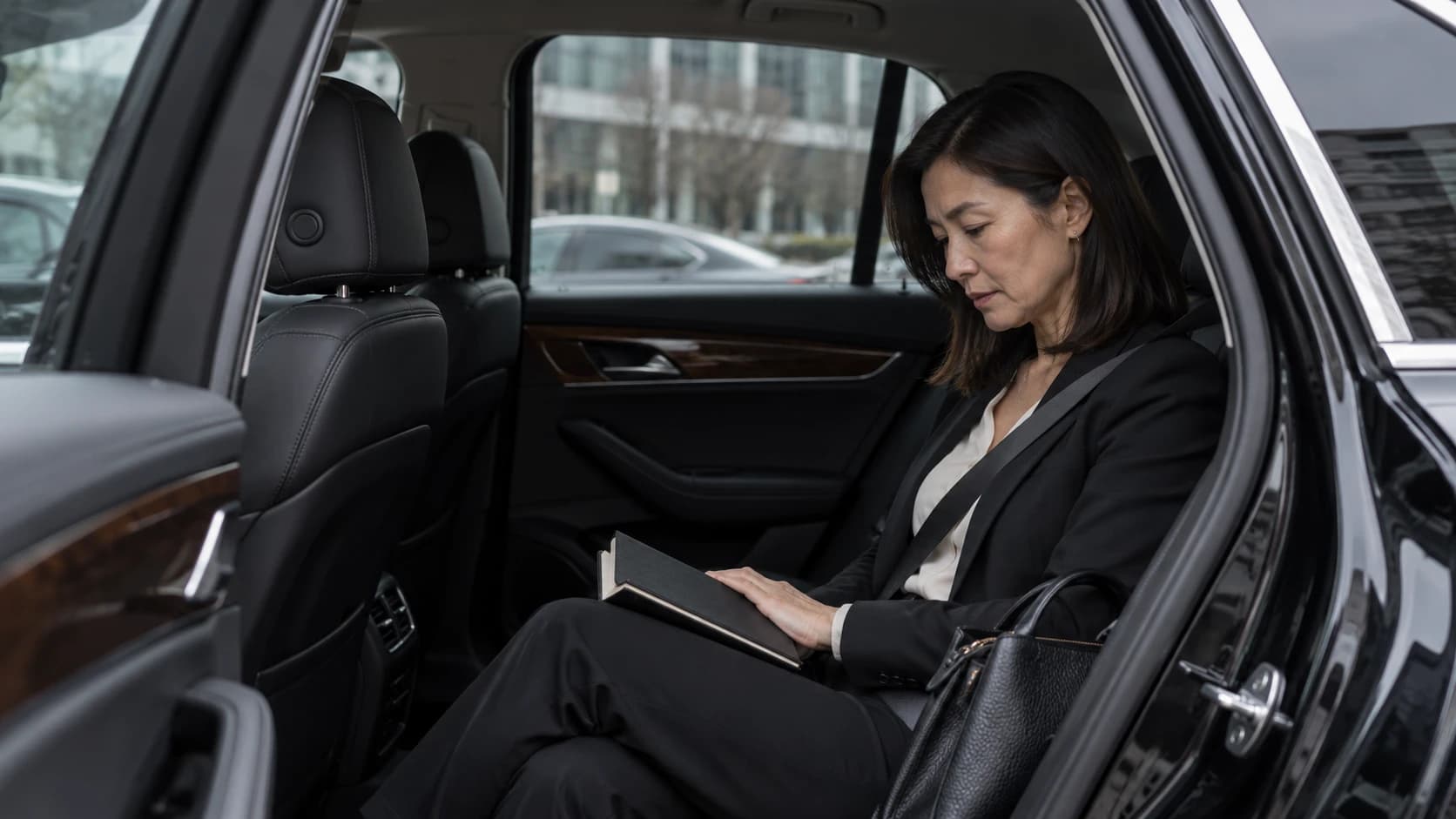
Sequence a roadshow by the meetings, then test the drives
A practical roadshow might begin at a River North hotel, continue to a Loop office, reach a West Loop lunch and finish at another client’s office. The route should preserve the meetings’ priority while avoiding unnecessary travel back across the same part of the city.
Attach a departure time to each appointment as well as an arrival time. A forty-five-minute meeting can require additional time at reception and an elevator journey before the passenger reaches the car. That allowance protects the next drive without asking the chauffeur to recover lost time on the road.
The person coordinating the day should identify which meeting can shorten or move if an earlier conversation runs long. Dispatch can coordinate the vehicle, while the organizer communicates any revised appointment order to the hosts.
For hosted delegations, corporate transportation adds a coordinator-led service context to the roadshow. Keep the lead passenger reachable during transfers so the day’s latest departure instructions reach the chauffeur. Corporate invoicing and account management are available for company travel without requiring every guest to coordinate the vehicle separately.
Separate driving time, meeting time and recovery space
Put recovery space before the most important arrival instead of leaving all spare time at the end. A board presentation after lunch needs protection from both the meal’s finish and the drive. If the morning runs on time, guests gain a calmer arrival rather than a rushed last approach.
Event controls can change the approach even when the expressway is moving. United Center separates parking and passenger procedures, while McCormick Place publishes different entrances for its four buildings. A roadshow ending at a venue needs the applicable passenger approach built into its final leg.
A generous schedule allows the passenger to complete the day without relying on an unusually quick drive. GPS trip monitoring and 24/7 dispatch support coordination during the reserved journey.
Typical fares
Four sedan and SUV classes have published hourly starting rates, with a three-hour minimum. Executive and Jet Sprinters are priced for your trip. Choose the duration and vehicle around the full schedule, including the time spent waiting at your stops.
| Trip | Executive sedan | Executive SUV | Luxury SUV | Luxury sedan |
|---|---|---|---|---|
| Hourly service | From $120/hr, 3-hour minimum | From $144/hr, 3-hour minimum | From $165/hr, 3-hour minimum | From $200/hr, 3-hour minimum |
| Executive and Jet Sprinters | Priced for your trip | |||
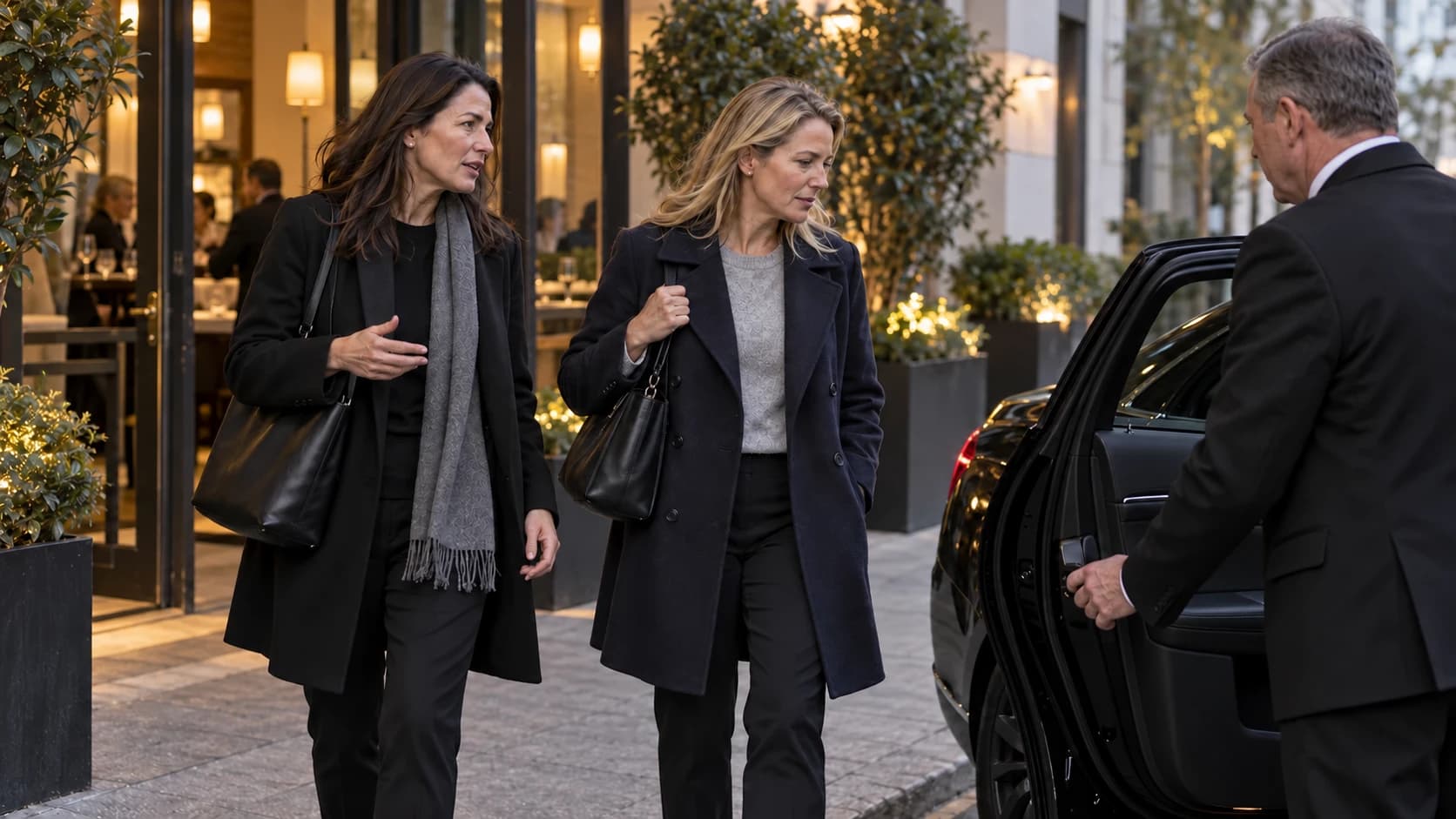
Use the correct McCormick Place building for a show-day stop
McCormick Place has North, South and West Buildings plus Lakeside Center. Its published main entrances place North and South on Dr. Martin Luther King Jr. Drive, West on Indiana Avenue, and Lakeside Center on DuSable Lake Shore Drive. A meeting room inside the campus can therefore lead to a different vehicle approach from another show’s entrance.
For a roadshow with a convention stop, the building and the meeting’s finish determine the next collection. A delegate leaving Lakeside Center for a Loop client meeting has a different departure point from a colleague in the West Building. The event’s passenger instructions identify the appropriate gate for the reserved vehicle.
Reserve McCormick Place transportation around the program you are attending, including any later office or dinner stop. Time inside the exhibition and time traveling afterward share the booked hourly block. A fixed afternoon presentation elsewhere deserves its own departure margin before the convention conversation begins.
Combine an airport arrival with business stops realistically
An O'Hare airport car service arrival starts with the flight and the passenger’s exit from the terminal, followed by the first business journey. Complimentary flight tracking supports the airport collection. Baggage collection and the passenger’s readiness still influence when the roadshow can begin.
If the first meeting has a fixed start, leave room between the flight’s scheduled arrival and that commitment. A hotel stop to leave bags, change clothes or collect a colleague adds another part to the block. Work backward from your airline’s terminal arrival target when setting the final meeting’s finish.
Choose the vehicle for the bags as well as the meeting party. An executive sedan accommodates up to two passengers and two bags, while a luxury sedan accommodates up to three of each. SUVs and Sprinters provide larger options, with actual fit dependent on bag size, requested child seats and mobility equipment.
Keep a game, dinner and collection within the reserved evening
An evening charter has the same time structure as a roadshow: travel, a stop with the guests away from the vehicle, and another departure. Waiting during dinner and the event is part of booked hourly time. A full game and a restaurant stop will often require a longer reservation than the minimum.
For a Wrigley Field evening, the last out is followed by the walk to the agreed passenger location. Dinner afterward can provide a later collection anchor, while dinner beforehand makes the game arrival the fixed commitment. Wrigley Field transportation covers the ballpark setting for a reserved sedan, SUV or Sprinter.
Some venues also set a deadline for the vehicle’s own entry. Credit Union 1 Amphitheatre publishes a pickup-vehicle arrival requirement 45 minutes before the show ends.
Give the coordinator a departure sequence that can be used
A concise running order can carry the first collection, each meeting’s arrival and release time, the venue entrance and the final destination. Keep host phone numbers and access instructions with the appointment they belong to. The coordinator can then communicate one changed stop without rewriting the whole day for every passenger.
For a delegation, identify which guests leave at each stop and who continues in the vehicle. An Executive Sprinter carries up to 13 passengers, subject to the actual luggage and equipment fit.
Corporate invoicing and account management support a company’s travel coordination, while the service schedule still sets the chauffeur’s work for that trip. Send a proposed running order to info@carservicechicago.com or call (855) 550-0567 for the hourly service option that fits it. Dispatch is available 24/7 for communication about the journey.
Hourly car service Chicago questions
How much does hourly car service in Chicago cost?
Hourly service in an executive sedan starts from $120/hr, with a three-hour minimum. Your exact price is shown before you book.
Does hourly time include waiting during a meeting?
Yes, waiting at stops is part of the booked hourly time. The reserved duration needs to cover those appointments, travel between them and the final drop-off.
When should I choose hourly service instead of two transfers?
Choose hourly service for several linked stops where you want the chauffeur assigned during the booked period. Separate one-way transfers suit independent journeys with a long stationary interval between them.
Is a three-hour block enough for a roadshow?
That depends on the meeting lengths, travel between stops and the first and final destinations. Three hours is the minimum reservation, so a longer sequence needs a longer reserved block.
Can an airport pickup be part of an hourly day?
Yes, an airport pickup can lead into meetings or another sequence of reserved stops. Complimentary flight tracking supports the arrival, and the schedule should allow for the passenger’s exit from the terminal before the first meeting.
Can my company use corporate invoicing?
Corporate invoicing and account management are available for company travel. The coordinator can discuss those arrangements alongside the passenger schedule before the journey.
How many passengers fit in an Executive Sprinter?
An Executive Sprinter accommodates up to 13 passengers. Actual fit depends on the luggage size, child seats and mobility equipment traveling with the party.
What should a roadshow organizer send dispatch?
Send the first collection, stops in order, appointment arrival and release times, and the final destination. Add the venue’s passenger entrance and a reachable lead contact so changes can reach the chauffeur during the day.