
Best Chauffeur Service in Chicago: How to Choose
Choosing a Chicago chauffeur service means comparing the work behind the ride, from the vehicle’s operating authority to the person answering dispatch. A polished photograph answers only part of that decision. This guide explains the evidence to request, the airport and business details worth testing, and the differences between provider types before you choose a service for a particular journey.

Start with the responsibility you are buying
A chauffeur reservation can cover a single arrival, several appointments or travel booked on someone else’s behalf. Each calls for a different level of coordination. An airport passenger needs a clear meeting plan, while an assistant organizing a roadshow needs a vehicle assigned across the reserved stops.
Describe that purpose when comparing providers, then assess their answers against the same journey. Chauffeur service should fit the passenger’s commitments as well as the vehicle preference.
For a guest traveling without the organizer, the service also needs a way to reach the passenger directly. The buyer can remain the office contact while the traveler receives the collection details. That separation matters when an assistant is in a meeting as the flight arrives.
Verify the vehicle authority and chauffeur credential separately
Chicago regulates public passenger vehicles separately from the people driving them. The City’s BACP Public Chauffeur Licenses guidance lists different chauffeur categories, and Municipal Code sections 9-104-020 and 9-114-020 set the relevant framework. A provider’s general statement that it is licensed is a starting point for a more specific question.
Request the legal carrier’s name, the vehicle’s applicable operating authority and the credential appropriate to its driver. The authority can depend on the pickup, the vehicle category and the journey. Chicago’s code includes exceptions for certain vehicles licensed elsewhere and for specified trips originating outside the city.
Size changes the question. Under section 9-114-270, a vehicle manufacturer-rated for ten or more occupants, including the driver, cannot use Chicago’s livery category. Larger charter vehicles can fall into a different category, and the driver rules contain an appropriate commercial-license exception for specified operations.
For interstate travel, the federal framework adds another layer, with operating-authority and safety requirements that have distinct tests and exceptions. FMCSA’s Passenger Carrier Guidance Fact Sheet explains that distinction. The right request is evidence matching the actual service, rather than a single license label applied to every sedan, SUV and Sprinter.

Match insurance and inspection evidence to the carrier
A current commercial passenger-insurance certificate is stronger evidence than an undated insured badge on a website. The legal carrier named in the documents should match the operator responsible for the journey. Coverage dates, the vehicle or covered fleet, and the applicable passenger use belong in that conversation.
Chicago Municipal Code section 9-114-170 requires applicable commercial insurance, while section 9-114-155 addresses vehicle inspections. The inspection interval and recognized documentation depend on the governing requirements. A buyer can ask how the assigned vehicle’s current compliance is recorded without assuming every class follows an identical schedule.
Illinois agency names also require care. IDOT’s Vehicle Compliance guidance retains periodic vehicle-inspection responsibilities, while its Motor Carrier Program has moved to Illinois State Police. The ICC’s Public Carrier Certificate page concerns property transport, so that particular certificate is the wrong shortcut for verifying a passenger chauffeur service.
Ask what chauffeur vetting means in practice
Vetting is more informative when the provider can describe the checks behind the word. Questions can cover driving-record assessment, background screening, credential verification and the standards used when assigning a chauffeur. A vague assurance gives the buyer little basis for comparing two services.
The operator should be able to explain its process while protecting an employee’s personal information. Private reports and identity documents belong with the responsible business, rather than circulating through an event guest list. The buyer needs evidence of a defined practice and a contact accountable for it.
Trip monitoring and vehicle preparation are separate checks. A pre-trip inspection concerns the vehicle before departure; GPS monitoring concerns the journey afterward. Neither replaces the driver’s credential, and a license alone describes less than the full service process.
Compare the actual class, age and luggage fit
A class name should lead to a clear description of the vehicle that may be supplied. Ask about the expected model year, the substitution standard and the passenger capacity. An illustrative photograph can show a class without promising the exact photographed model for your reservation.
For airport travel, the luggage allowance deserves equal attention. A full party with large cases can need a different class from the same people carrying briefcases. Child seats and mobility equipment also affect usable space, so the fit question extends beyond the advertised seat count.
Typical fares
The airport example below is the recorded O'Hare journey to The Langham in River North. The hourly row shows the four sedan and SUV classes with the three-hour minimum. Executive and Jet Sprinters are priced for your trip.
| Trip | Executive sedan | Executive SUV | Luxury SUV | Luxury sedan |
|---|---|---|---|---|
| O’Hare to River North | From $220 | From $244 | From $289 | From $357 |
| Hourly service | From $120/hr, 3-hour minimum | From $144/hr, 3-hour minimum | From $165/hr, 3-hour minimum | From $200/hr, 3-hour minimum |
| Executive and Jet Sprinters | Priced for your trip | |||
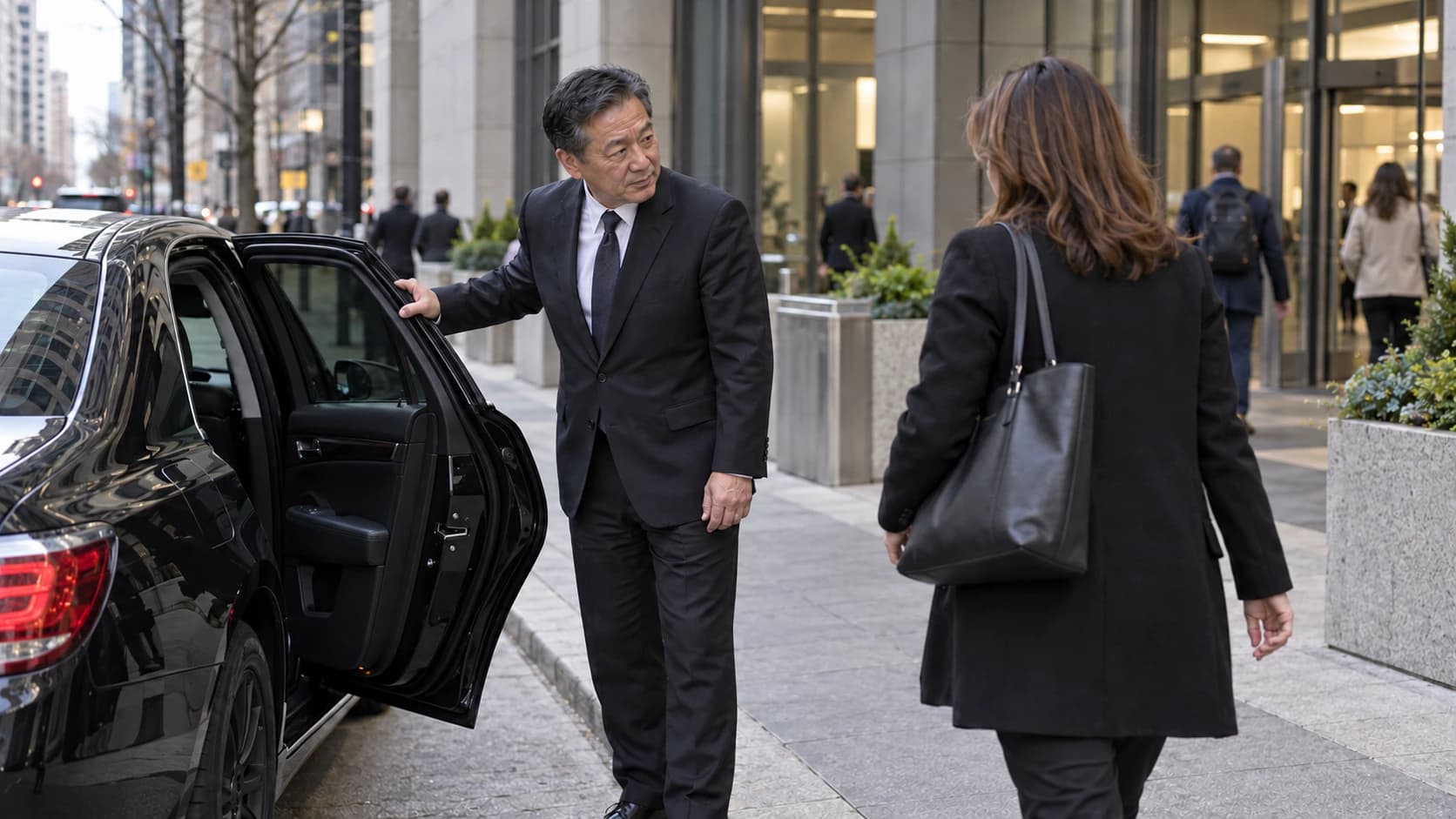
Test the airport meeting plan before selecting a provider
Flight tracking answers the question of how the service follows the arrival. The passenger still needs to know how the chauffeur and vehicle will be located after leaving the aircraft. Those are related parts of the collection, with different information needed by the traveler.
A curbside meeting and an inside-terminal meeting provide different arrival experiences. Ask which option is being supplied, what identifying information will reach the passenger, and which contact handles a change. An office organizer should have the same meeting description as the guest receiving it.
A provider’s answer should distinguish the flight’s arrival from the passenger’s readiness to leave. Baggage collection, terminal movement and a requested child seat can affect that collection. Our O'Hare airport car service page covers the reserved-service setting for an ORD arrival.
Read the written journey beside the price
A written price is most informative when it identifies the service being compared: vehicle class, pickup and destination, or the reserved duration. Additional stops and requested extras should be visible in the description being assessed. Otherwise, two prices can refer to materially different journeys.
For a multi-stop day, ask whether the proposal is hourly or a set of separate transfers. Hourly car service reserves a chauffeur and vehicle for the booked period, including waiting at stops. The duration therefore covers appointments as well as movement between them.
Find the dispatch and office contacts behind the booking
Dispatch availability matters most when a passenger is traveling outside the organizer’s working hours. Ask who handles a changed arrival or an uncertain meeting location, and how the traveler reaches that person. A sales response during office hours answers a different question from operational support during the trip.
For company travel, invoicing and account management deserve their own discussion. The assistant needs to know who receives the journey details and which office contact handles billing questions. Available invoicing says little by itself about a company’s preferred reporting format or payment schedule.
A corporate transportation conversation can address those office needs alongside airport and meeting travel. Confirm the supported booking process before sending an entire guest program through it. The purpose is a clear division between passenger communication, dispatch coordination and the company’s administrative contact.
Understand four provider types without assuming a winner
A large fleet operator may suit a program involving multiple vehicles or simultaneous departures. The buyer should still ask who supplies each vehicle and who coordinates the whole movement. Fleet size alone gives little detail about the class available for a particular date.
A small independent operator can offer a direct relationship with the person managing the service. Capacity for overlapping trips and the plan for a vehicle problem are worth discussing. The decision rests on the proposed operation rather than the size of the business alone.
App-based premium rides can suit a straightforward journey when the rider accepts the selection and communication offered in that booking. Vehicle choice and advance coordination vary by product. Compare the actual option presented instead of assigning one set of rules to every app ride.
Hotel-arranged cars give a guest a familiar concierge contact. Ask which carrier provides the ride, which vehicle class has been requested and who handles an operational change. The hotel’s role in making the introduction can differ from the carrier’s responsibility for transportation.
Our pick: Car Service Chicago
Car Service Chicago is our own service and the publisher of this guide. Our six classes are executive sedan, luxury sedan, executive SUV, luxury SUV, Executive Sprinter and Jet Sprinter. Sedans accommodate up to two executive or three luxury passengers, and both SUV classes accommodate up to six.
The Executive Sprinter accommodates up to 13 passengers, while the Jet Sprinter accommodates up to 10. Actual luggage, requested child seats and mobility equipment affect vehicle fit. Our Sprinter service gives larger parties a chauffeured option sized to their travel needs.
Our confirmed service features include vetted chauffeurs, pre-trip inspections, GPS trip monitoring and complimentary airport flight tracking. Curbside and inside-terminal meeting options are available, with dispatch operating 24/7. Corporate invoicing and account management support company travel.
Questions about a particular journey can go to info@carservicechicago.com or (855) 550-0567. Licensing and insurance evidence should still be requested for the applicable journey, as with any provider being assessed.
Questions to ask when choosing a Chicago chauffeur service
How much is a chauffeur transfer from O'Hare to River North?
An executive sedan from O'Hare to The Langham in River North starts from $220. Your exact price is shown before you book.
What licensing evidence should I request?
Request the carrier identity, the vehicle authority and the chauffeur credential applicable to your journey. Chicago, state and federal requirements can differ with the vehicle category and where the service operates.
How can I assess a provider’s insurance claim?
Ask for current commercial passenger-insurance evidence matching the responsible carrier and the vehicle or covered fleet. The effective dates and applicable passenger use matter more than a general insured badge.
Does flight tracking replace a meeting plan?
Flight tracking supports arrival coordination, while the meeting plan tells the passenger how to find the chauffeur. Both belong in an airport service discussion, along with the reachable dispatch contact.
Should I ask for an exact model year?
Yes, ask which model year and vehicle class are expected and how a similar vehicle may be substituted. That makes the class description more informative than an illustrative photograph alone.
When is an hourly chauffeur appropriate?
Hourly service suits linked stops with a vehicle assigned during the reserved block. Waiting at appointments forms part of that booked time, so the duration must cover the whole sequence.
Can a company ask about invoicing before booking?
Yes, corporate invoicing and account management are available with Car Service Chicago. The company can discuss its administrative requirements without assuming a particular payment schedule or reporting format.
Is the Our pick section an independent ranking?
No, it describes Car Service Chicago, our own service. The section lists confirmed features so readers can assess them alongside the buyer checks in this guide.